
11 Stunning Towns to Explore on the Costa del Sol

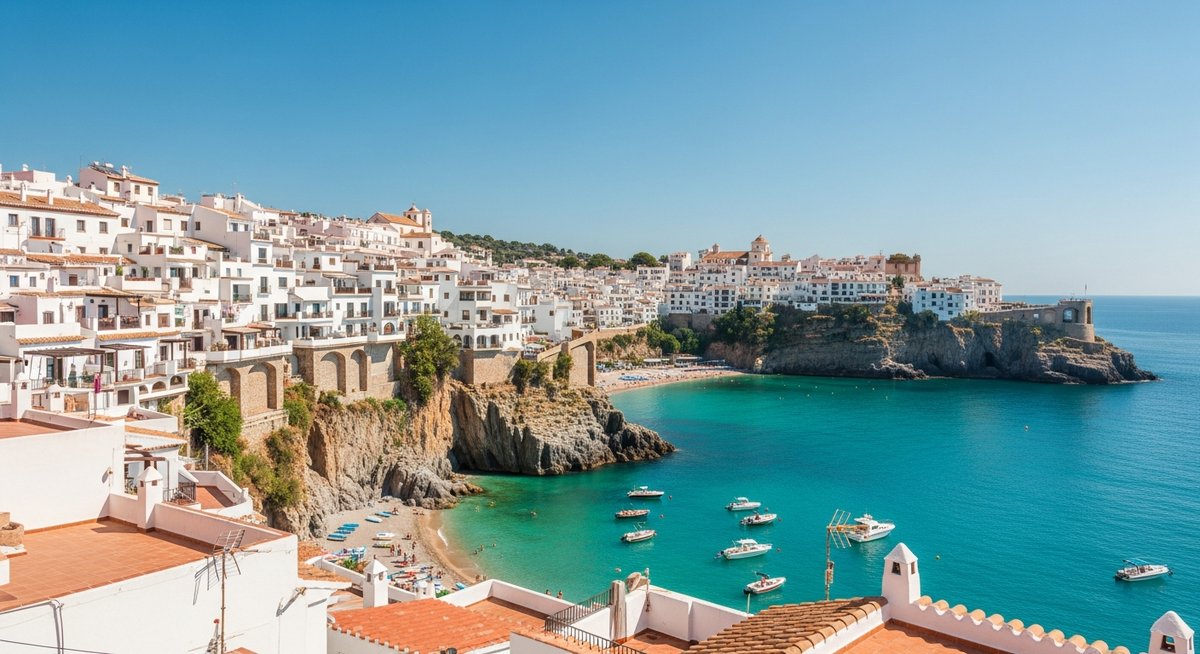
The Costa del Sol stretches for about 150 kilometers (93 miles) along Andalusia’s Mediterranean coast, offering some of Spain’s most picturesque coastal towns.
From traditional fishing villages to glamorous resort destinations, this sun-soaked region has something for every type of traveler who’s looking to experience authentic Spanish coastal life.
Nerja
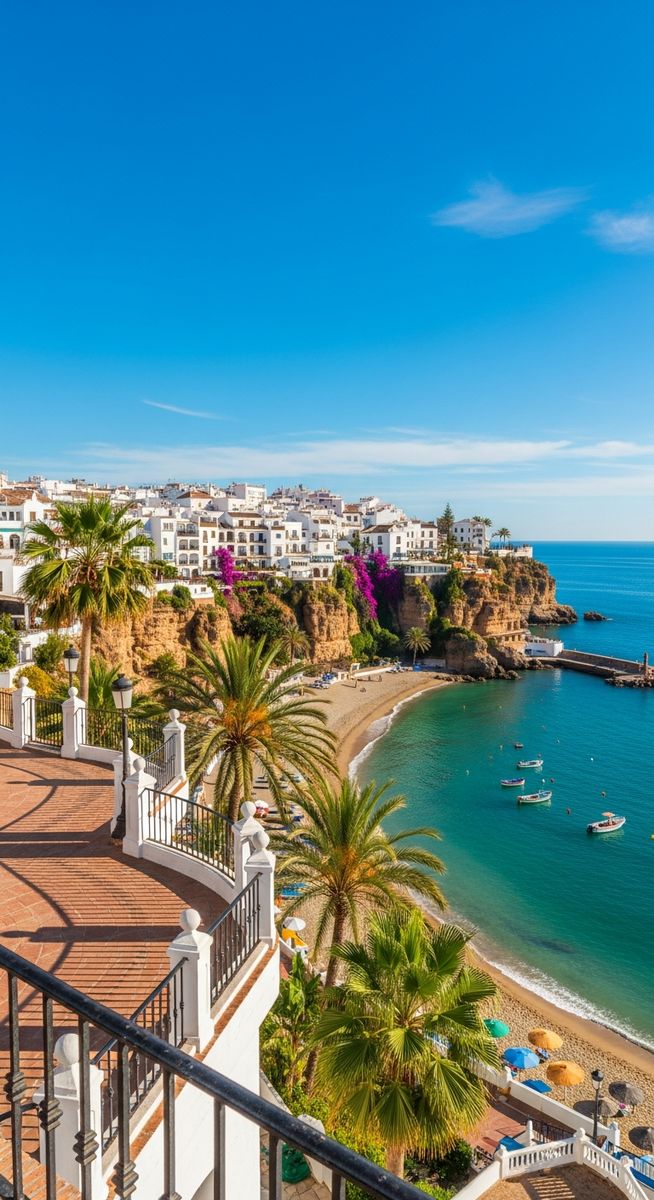
Nerja sits dramatically on clifftops about 50 kilometers (31 miles) east of Málaga, offering some of the most spectacular coastal views in all of Spain. The town’s crown jewel is the Balcón de Europa, a palm-lined promenade that juts out into the Mediterranean and provides panoramic vistas that’ll have you reaching for your camera constantly.
The beaches here are absolutely gorgeous, with Burriana Beach being the most popular thanks to its chiringuitos (beach bars) and water sports facilities. But if you’re after something more secluded, head to Playa de Maro, where crystal-clear waters lap against a pebbly shore surrounded by pine-covered cliffs.
Don’t miss the Nerja Caves, located just 5 kilometers (3 miles) from town – these underground chambers are home to some of Europe’s oldest cave paintings. And you don’t have to miss them even if you don’t have time to stay in Nerja, as this great day trip from Málaga takes you to Nerja, the Caves, and Frigiliana…which I’ll get to in a moment!
Frigiliana
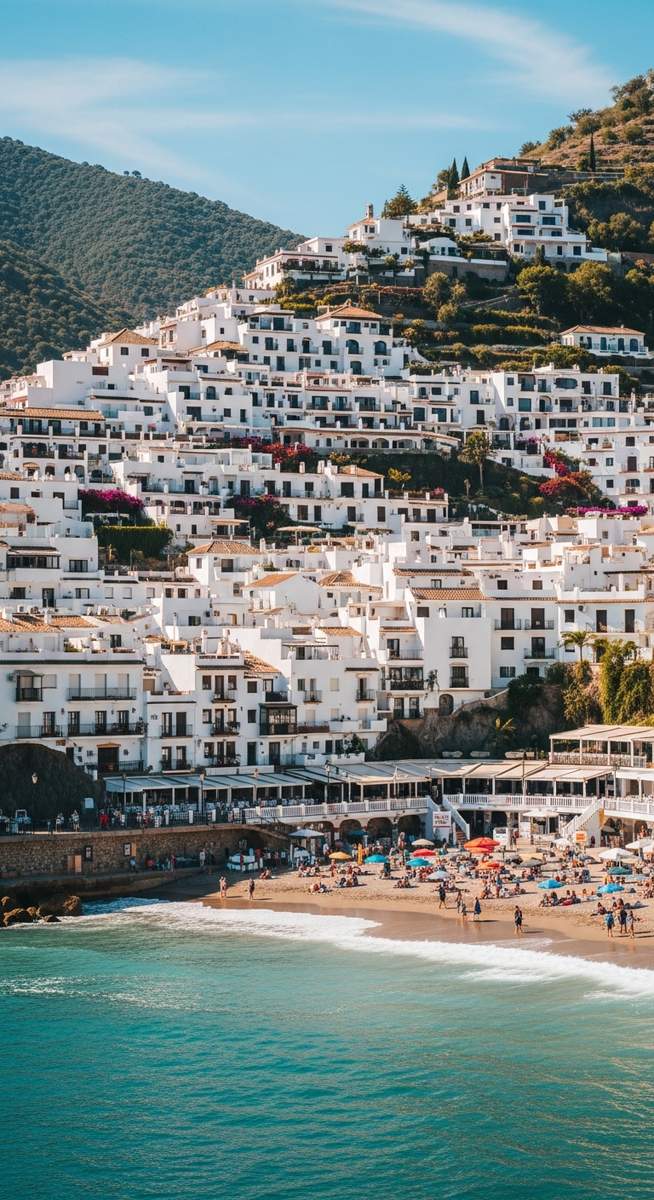
Just 6 kilometers (4 miles) inland from Nerja, Frigiliana is hands down one of the most beautiful white villages in all of Andalusia. In fact, you can even combine the two with that day trip from Málaga I mentioned.
This hillside pueblo blanco (white town) cascades down the mountainside like a waterfall of whitewashed houses, each one adorned with colorful flower pots and wrought-iron balconies.
The narrow cobblestone streets are perfect for wandering aimlessly – you’ll discover hidden courtyards, tiny plazas, and viewpoints that offer incredible vistas across the coastline below. The old Moorish quarter is particularly charming, with ceramic tiles telling the story of the area’s fascinating history.
The town even produces its own honey rum called ron miel, which you can sample at several local bars and shops.
Ronda
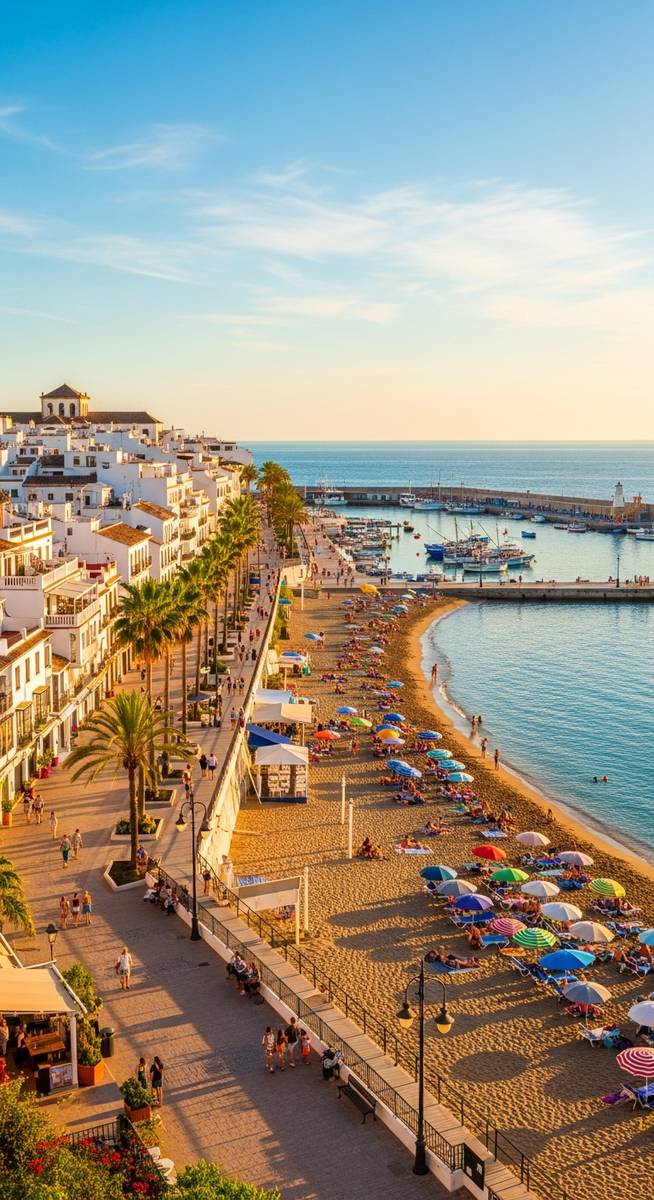
While Ronda sits about 50 kilometers (31 miles) inland from the coast, no Costa del Sol itinerary is complete without visiting this dramatic mountain town. Built on either side of a 100-meter (328-foot) deep gorge called El Tajo, Ronda offers some of the most spectacular views in all of Spain.
The Plaza de Toros is considered the birthplace of modern bullfighting, and even if you’re not interested in the sport (like me), the museum provides fascinating insights into Spanish culture and history. The old town on the south side of the gorge is a maze of cobblestone streets lined with historic buildings and traditional tapas bars where you can experience authentic Andalusian cuisine.
The bridge spanning the gorge (Puente Nuevo) is the town’s most famous landmark and offers vertigo-inducing views down into the valley below.
I’d highly recommend taking a day tour from Seville to Ronda and the renowned White Villages to experience the beauty of this corner of the world – without having to organize any part of the trip yourself!
Mijas
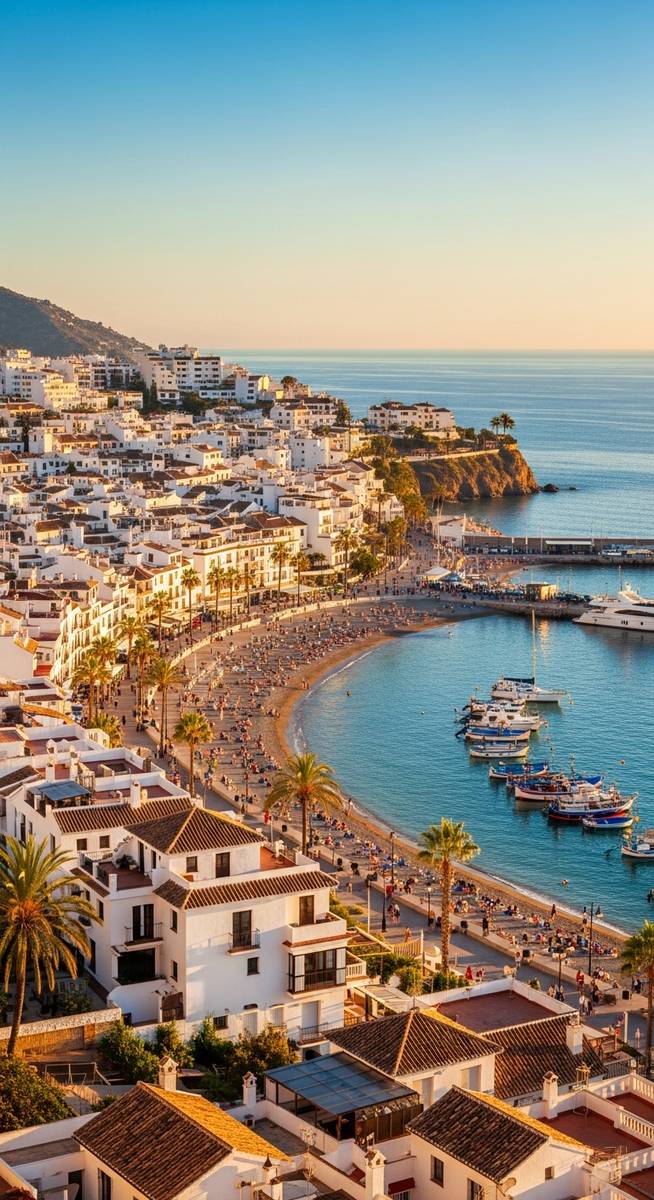
Mijas perfectly embodies the dual nature of the Costa del Sol, split between the bustling coastal resort of Mijas Costa and the traditional mountain village of Mijas Pueblo. The hilltop pueblo offers some of the best panoramic views on the entire coast – on clear days, you can see all the way to Africa, which is only 14 kilometers (9 miles) across the strait.
The village center is a maze of narrow streets lined with white houses, artisan shops, and cozy restaurants serving traditional Andalusian cuisine. The main square features a unique bullring that’s carved directly into the rock, creating an amphitheater-like setting that’s unlike anywhere else in Spain.
What makes Mijas special is how it’s managed to maintain its authentic character despite being so accessible to tourists. The famous donkey taxis are still one option to explore the steeper streets (although do consider how humane this actually is…), though most visitors prefer walking to soak up the peaceful atmosphere.
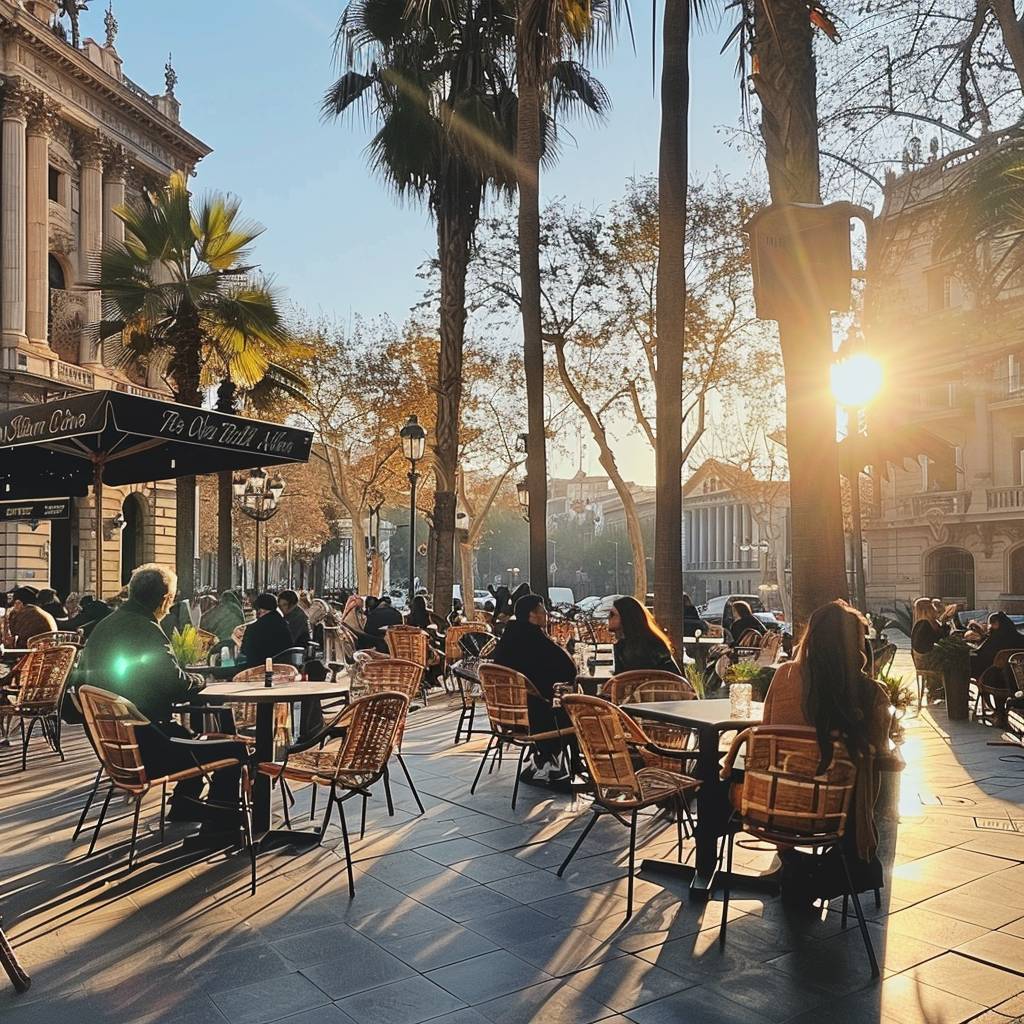
Check out this amazing day trip from Málaga to Mijas and Puerto Banus to see this beautiful town without any of the hassle of having to organize it yourself!
Benalmádena
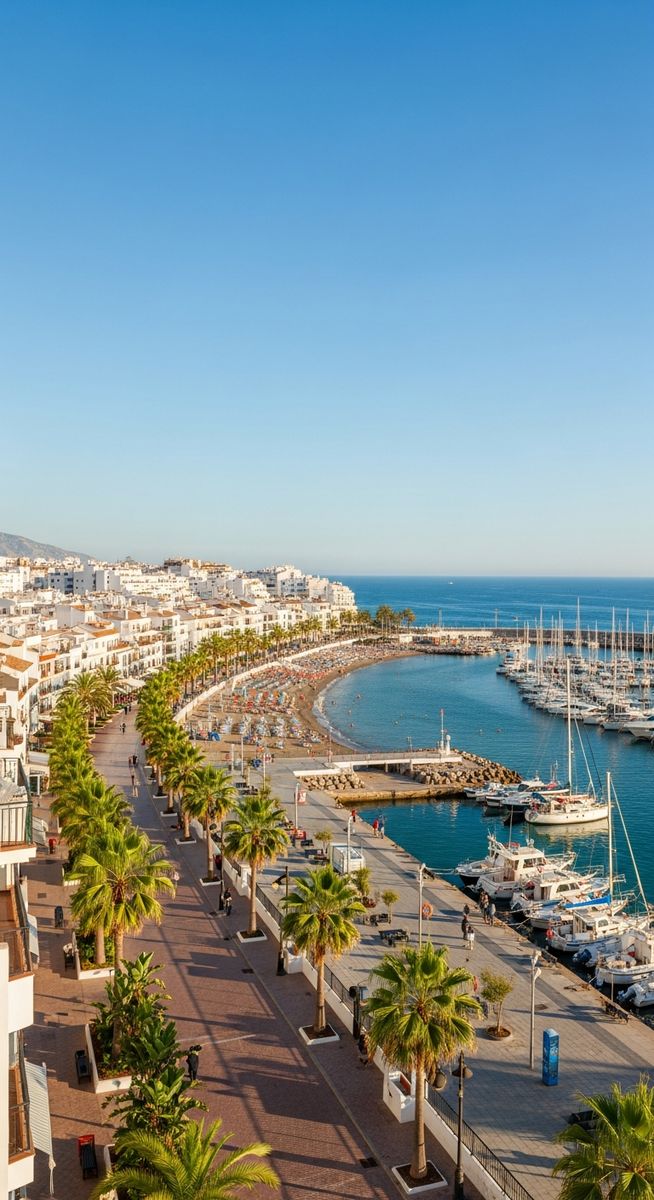
Benalmádena surprises many visitors with its diversity – this isn’t just another beach resort town. While Benalmádena Costa offers excellent beaches and a modern marina (it’s even famous for dolphin spotting – you can even do a tour like this one to see them up close), the real charm lies in the original pueblo that sits about 300 meters (984 feet) above sea level.
The highlight has to be the Buddhist Temple (Stupa), which feels completely unexpected in this Mediterranean setting. This authentic Tibetan temple, surrounded by peaceful gardens, offers meditation sessions and incredible views across the coast – it’s one of the most unique attractions you’ll find anywhere in Spain.
Take the cable car up to Mount Calamorro for even more spectacular views and access to hiking trails through the natural park. The ride itself is an adventure, climbing 771 meters (2,530 feet) above sea level and offering bird’s-eye views of the entire coastline.
Fuengirola
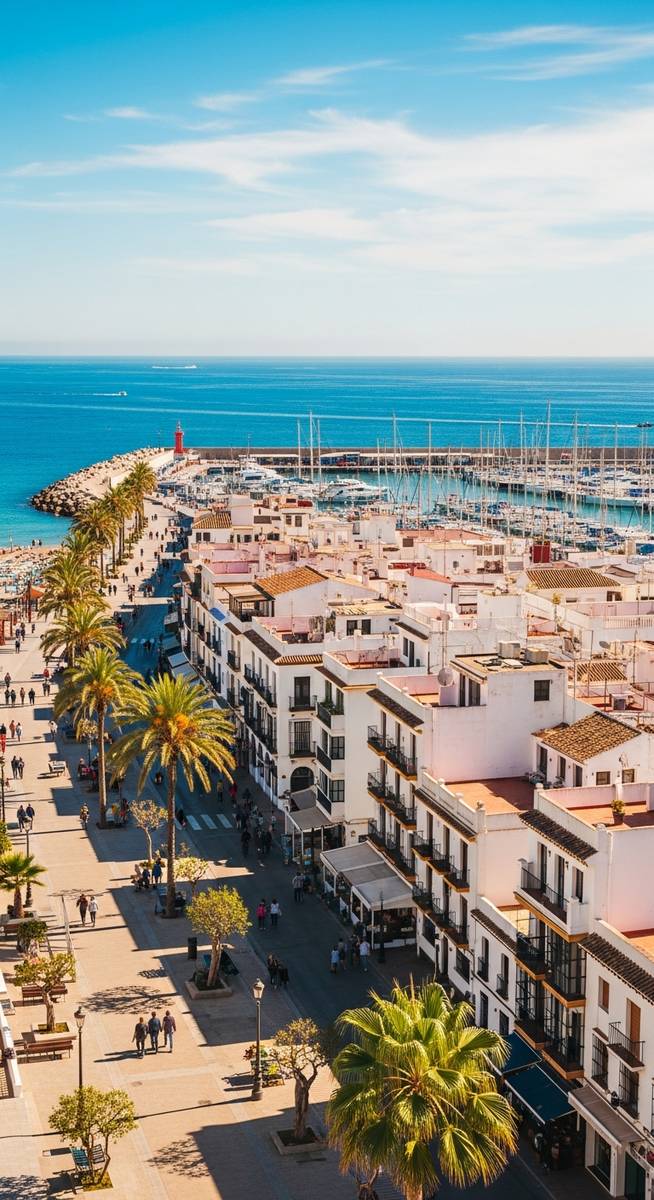
Fuengirola has evolved from a simple fishing village into one of the Costa del Sol’s most family-friendly destinations, but it’s done so without losing its Spanish soul. The 7-kilometer (4-mile) promenade is perfect for evening strolls, lined with chiringuitos where you can enjoy fresh seafood while watching the sunset.
The town’s Roman ruins at Suel provide a fascinating glimpse into the area’s ancient past, while the weekly Tuesday market is one of the largest on the coast. Here you can haggle for everything from fresh produce to handmade crafts – it’s a great way to experience local life beyond the beach scene.
What I love about Fuengirola is how it feels genuinely Spanish rather than just a tourist resort. Families from Córdoba and Sevilla have been coming here for generations, which means you’ll find authentic tapas bars and local traditions that haven’t been diluted by mass tourism.
Marbella
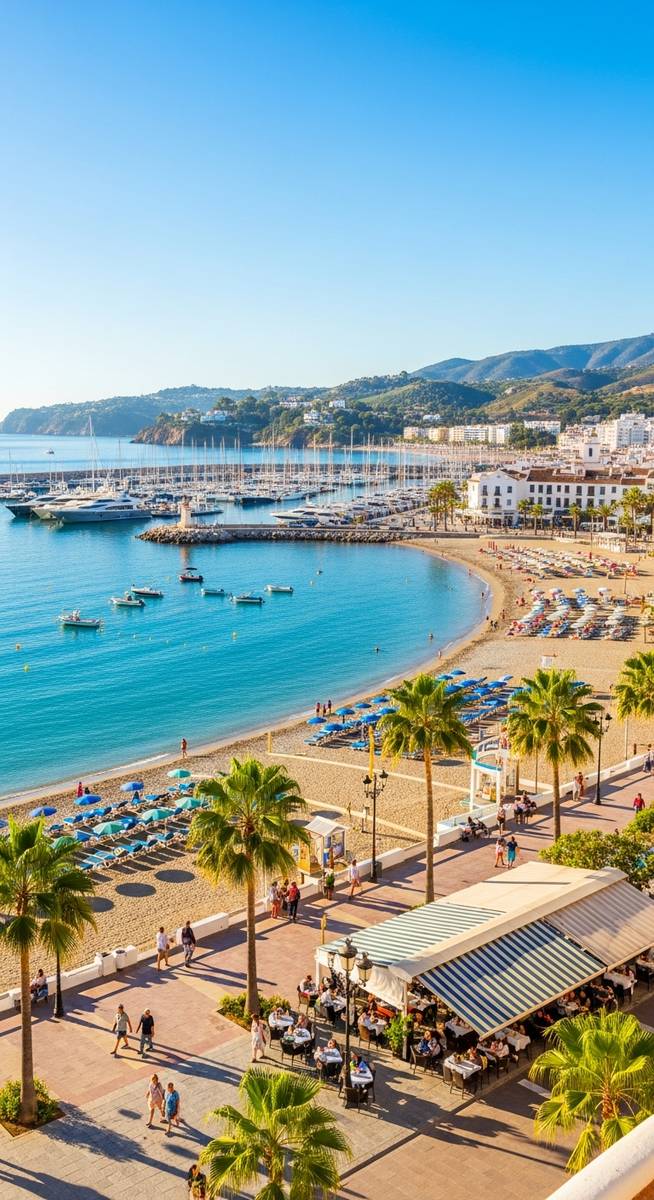
Marbella has become synonymous with luxury and glamour, but don’t let that reputation fool you into thinking it’s lost its authentic charm. The old town, known as Casco Antiguo, is a beautiful maze of narrow streets centered around the orange tree-filled Plaza de los Naranjos.
The Golden Mile between Marbella and Puerto Banús is where you’ll find the most exclusive hotels and restaurants, but even if you’re not staying at one of the five-star resorts, it’s worth walking along the beachfront to see how the other half lives. The beaches here are wide and well-maintained, with excellent chiringuitos serving everything from simple tapas to gourmet cuisine.
Despite all the development, Marbella has managed to preserve pockets of traditional Andalusian life. Head inland to explore the surrounding mountains, where you can still find authentic cortijos (farmhouses) and olive groves that have been in the same families for generations – if you’re planning to explore more of southern Spain’s cultural treasures, Marbella makes an excellent base.
Puerto Banús
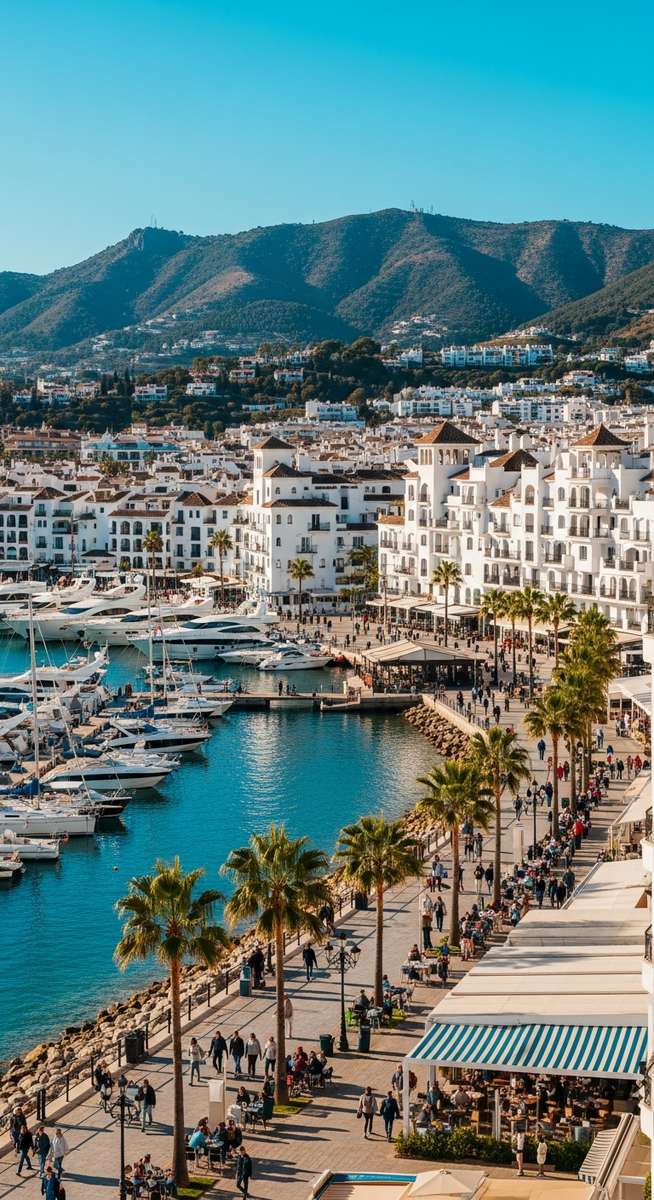
While technically part of Marbella, Puerto Banús deserves its own mention as one of Europe’s most exclusive marinas. This is where you’ll see superyachts worth more than most people’s houses, alongside designer boutiques and restaurants where a simple coffee can cost more than a full meal elsewhere.
But here’s the thing – even if you’re traveling on a budget, Puerto Banús is worth visiting just for the people-watching and the sheer spectacle of it all. Grab a drink at one of the harbor-front bars during happy hour and watch the parade of Ferraris, Lamborghinis, and other exotic cars that cruise the waterfront.
As I mentioned before, you can even take a day trip from Málaga to Mijas and Puerto Banus to experience the spectacle of this town hassle-free!
The beaches on either side of the marina are actually quite nice and less crowded than you might expect. Plus, the weekly Saturday market offers more affordable shopping options if the designer boutiques are out of your price range.
Estepona
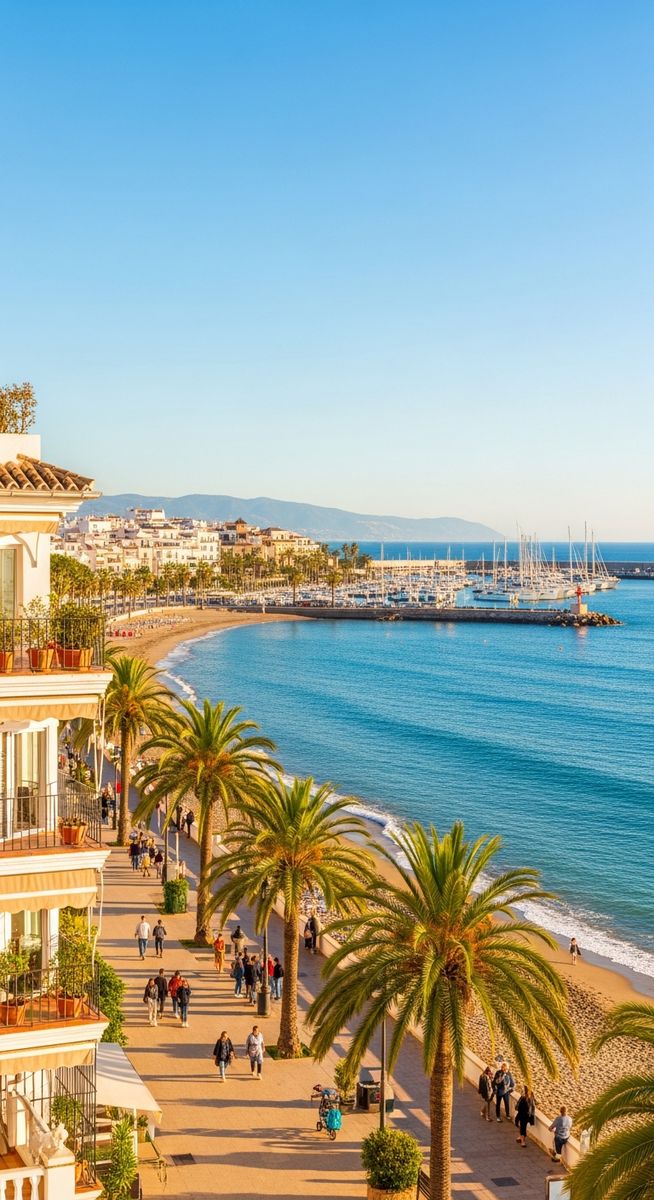
Estepona has undergone an incredible transformation in recent years, evolving from a sleepy fishing village into what locals call “the Garden of the Costa del Sol.” The town has invested heavily in public art, with over 50 murals decorating buildings throughout the historic center.
The flower-lined streets are genuinely beautiful – every corner seems to have been designed with Instagram in mind, but it never feels forced or artificial. The weekly Sunday market is excellent for fresh produce and local crafts, while the beaches stretch for kilometers in both directions from the town center.
What makes Estepona special is how it’s managed this transformation while keeping prices reasonable and maintaining its Spanish character. You’ll still hear more Spanish than English on the streets, and the restaurants serve authentic local cuisine rather than international tourist fare.
Casares
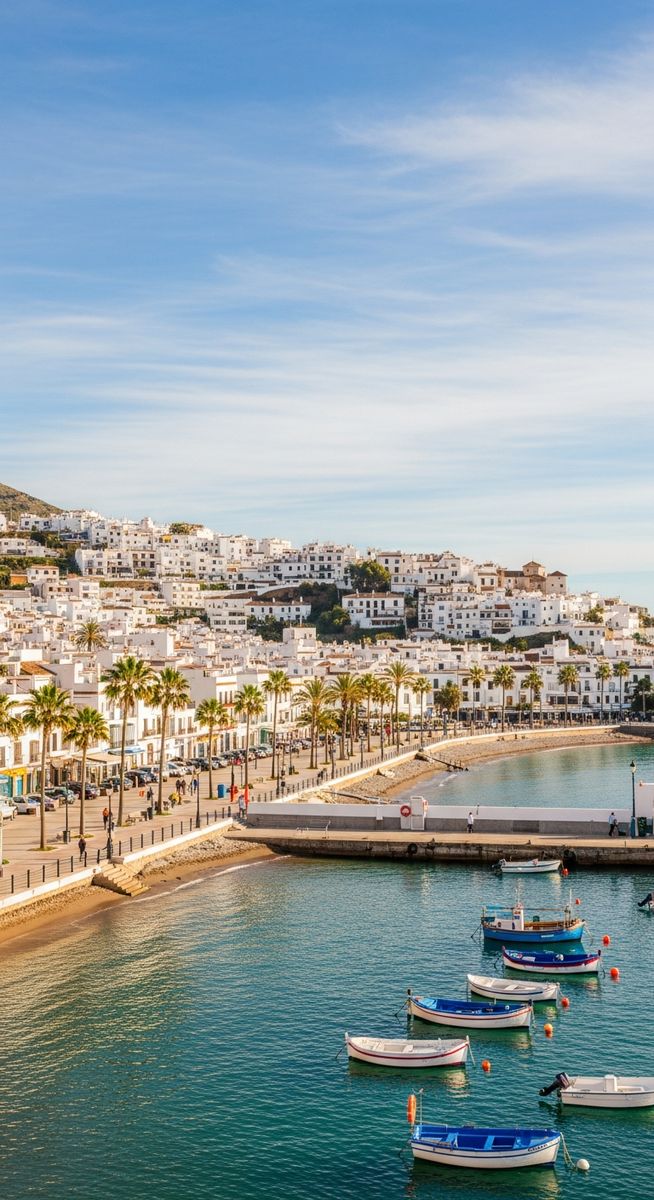
About 20 kilometers (12 miles) inland from the coast, Casares is often called the most photogenic of all Andalusia’s white villages. The town literally spills down the mountainside in a cascade of whitewashed houses, dominated by the ruins of a Moorish castle at the summit.
The narrow streets are too steep for cars in many places, so exploring on foot is the only way to really appreciate the village’s beauty. Every turn reveals another picture-perfect view, whether it’s a hidden plaza with a centuries-old fountain or a lookout point with views toward Gibraltar.
This is where you can experience traditional Andalusian village life that has remained largely unchanged for centuries. The local restaurants serve hearty mountain cuisine, and if you’re lucky enough to visit during one of the festivals, you’ll see traditions that date back generations.
Setenil de las Bodegas
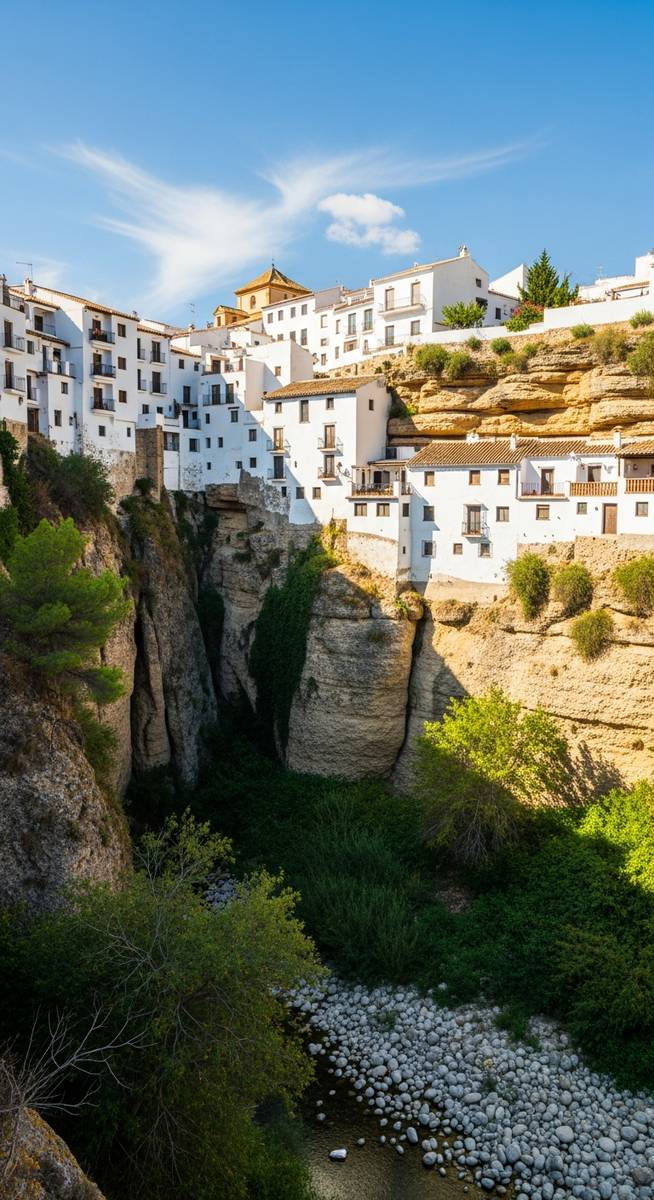
This unique town about 20 kilometers (12 miles) from Ronda takes the concept of cave dwellings to an extreme – many of the houses are literally built into and under massive rock overhangs. The most famous streets, Cuevas de la Sombra and Cuevas del Sol, have houses where the rock formation serves as the roof.
Walking through Setenil feels like exploring a fantasy village from a fairy tale. The white houses seem to grow directly out of the cliff face, and in some places, the rock overhang is so extensive that the streets remain in permanent shade even during the hottest summer days.
The town’s name comes from the Arabic “Septem Nihil” (seven times no), referring to the seven sieges it took Christian forces to capture it from the Moors. Today, it’s a peaceful place where you can enjoy traditional Andalusian cuisine in restaurants that are literally carved into the rock.
Planning Your Costa del Sol Adventure
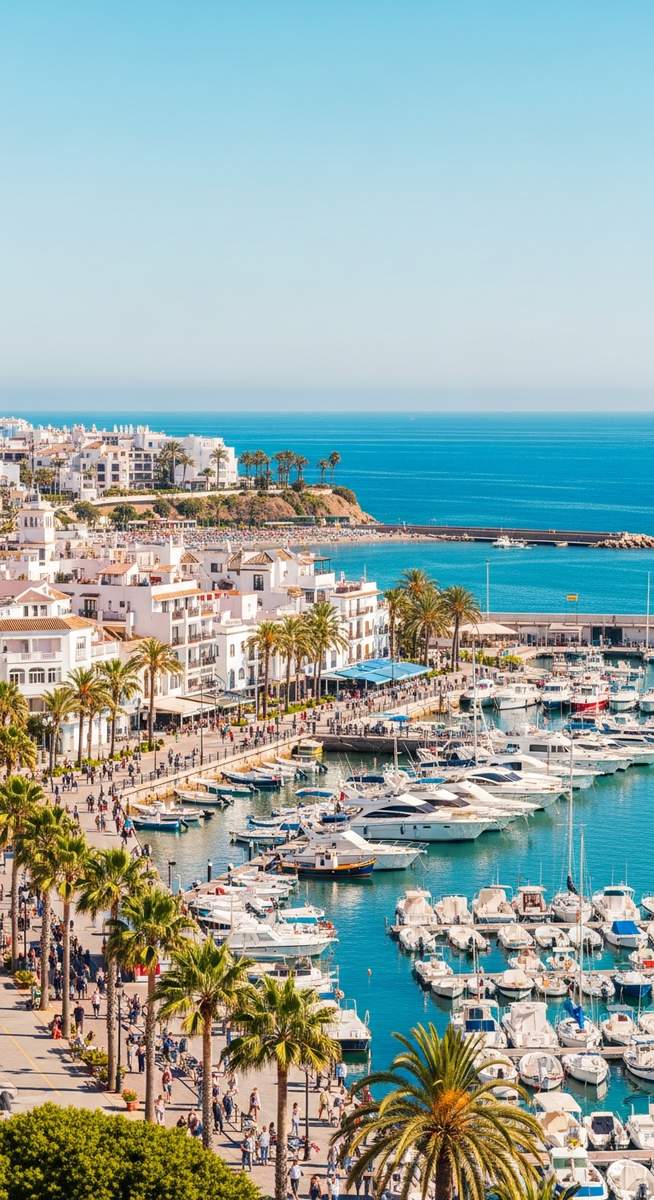
The beauty of the Costa del Sol is that you can base yourself in one location and easily explore the others as day trips. Málaga makes an excellent hub, with its international airport and good transport connections to all these towns – you could even extend your trip to include other incredible destinations in southern Spain.
The best time to visit is between April and October when the weather is warm but not overwhelming. Summer temperatures can reach 35°C (95°F), so spring and autumn offer the perfect balance of good weather and fewer crowds.
Getting around is easiest with a rental car, especially if you want to explore the inland villages like Casares and Setenil. However, the coastal towns are well-connected by bus and train, making car-free travel perfectly feasible for most destinations – check out my comprehensive guide to planning the perfect Spanish itinerary for more travel planning tips.
