
14 Unique Christmas Traditions You’ll Only Find in Spain

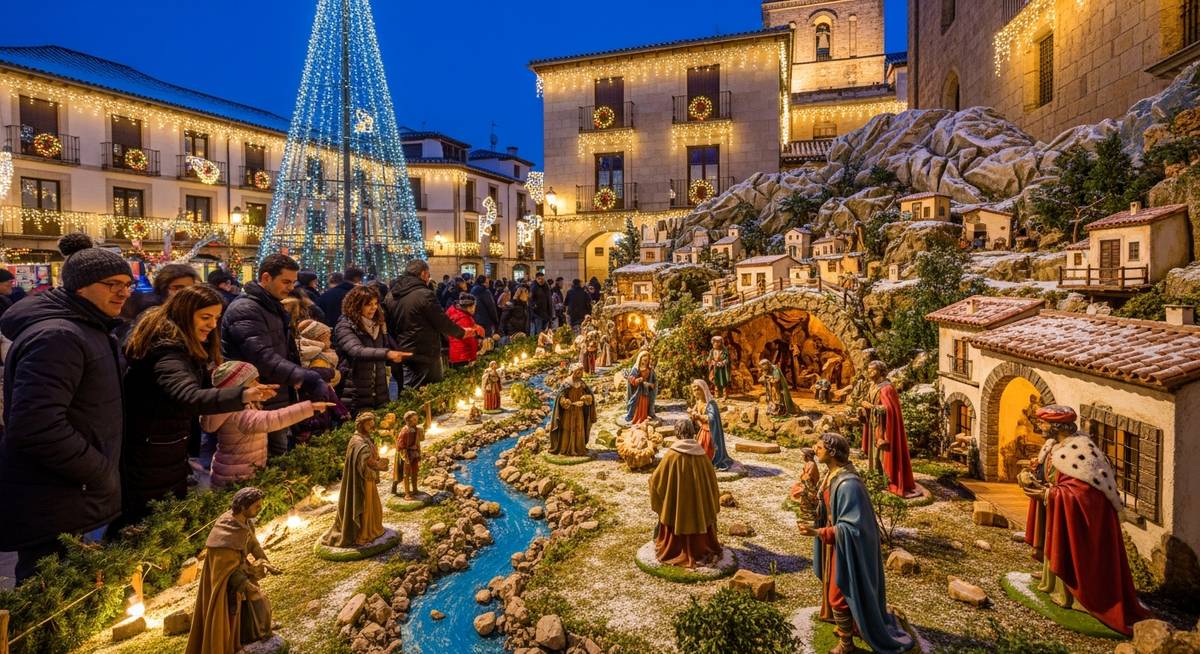
Christmas in Spain is full of traditions that go way beyond just gift-giving and decorations. From festive foods to Three Kings parades, the holiday season stretches well into January and brings a unique rhythm to everyday life.
If you’re visiting for the first time, you’ll find plenty of new things to experience – and if you’ve been before, there’s always something different to discover. Either way, these Spanish Christmas traditions will show how the holidays here are truly something special.
(Don’t forget to check the weather in Spain during December and January to plan properly!)
1. Christmas Markets Across Spain
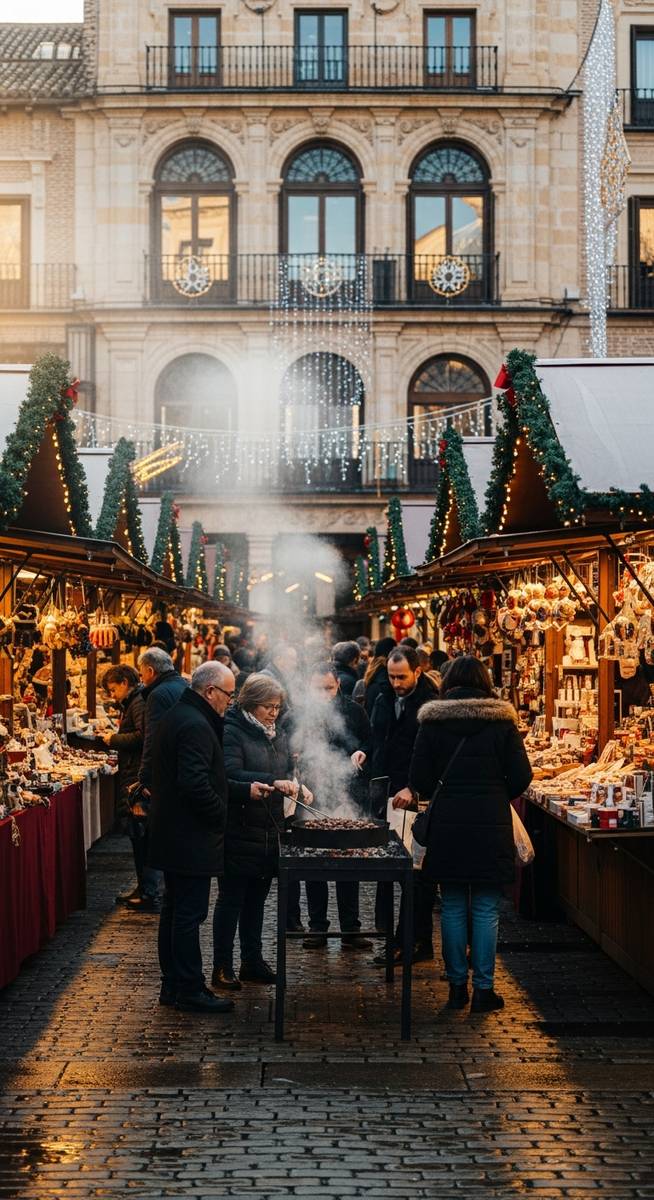
Spain’s Christmas markets transform city squares into magical winter wonderlands filled with handcrafted gifts, traditional sweets, and festive decorations. Barcelona at Christmas is particularly magical, with the famous Fira de Santa Llúcia market near the cathedral running since 1786.
Madrid’s Plaza Mayor hosts one of the country’s most famous Christmas markets, where you can find everything from nativity figurines to traditional Spanish Christmas treats. The markets in Seville also offer a unique Andalusian twist on holiday shopping, perfect to explore while visiting this incredible southern city.
2. Traditional Spanish Christmas Foods
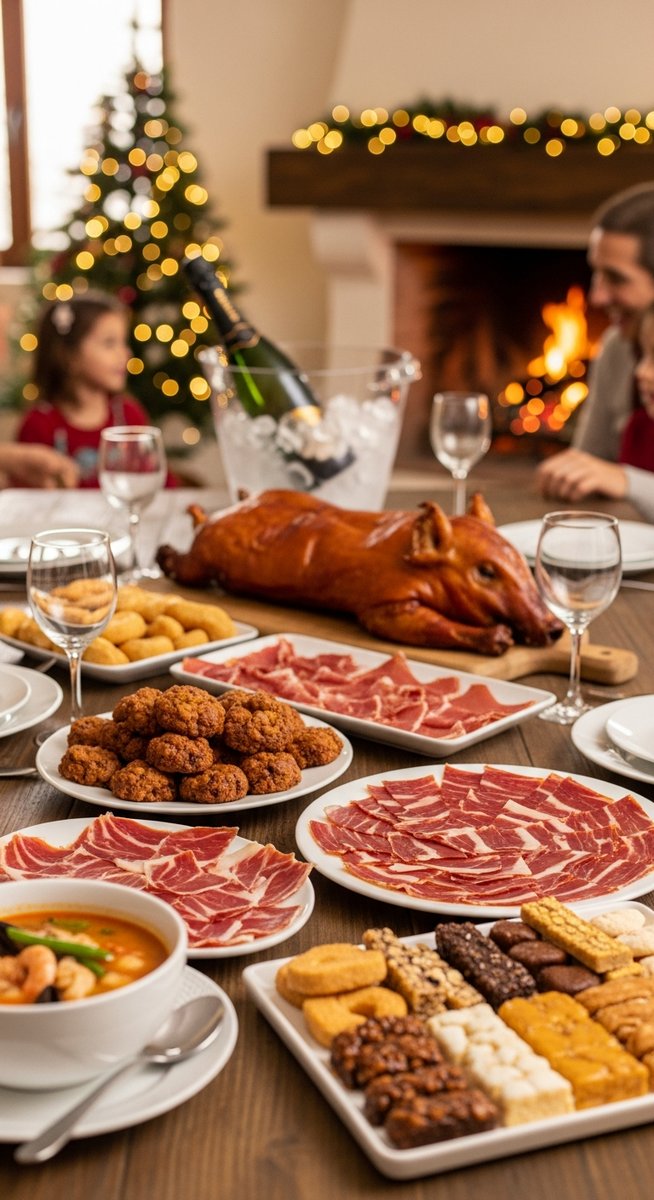
Spanish Christmas tables groan under the weight of traditional delicacies that vary dramatically by region. Turrón, Spain’s famous nougat candy, comes in dozens of varieties – from the hard Alicante style to the soft Jijona version.
Polvorones and mantecados, crumbly shortbread cookies dusted with powdered sugar, appear in every Spanish household during December.
In northern Spain, families feast on cochinillo (roast suckling pig), while coastal regions like Valencia prefer seafood-heavy Christmas Eve dinners featuring everything from prawns to sea bass – you can learn more about Valencia’s incredible food scene and why the city is famous for its cuisine.
3. El Caganer
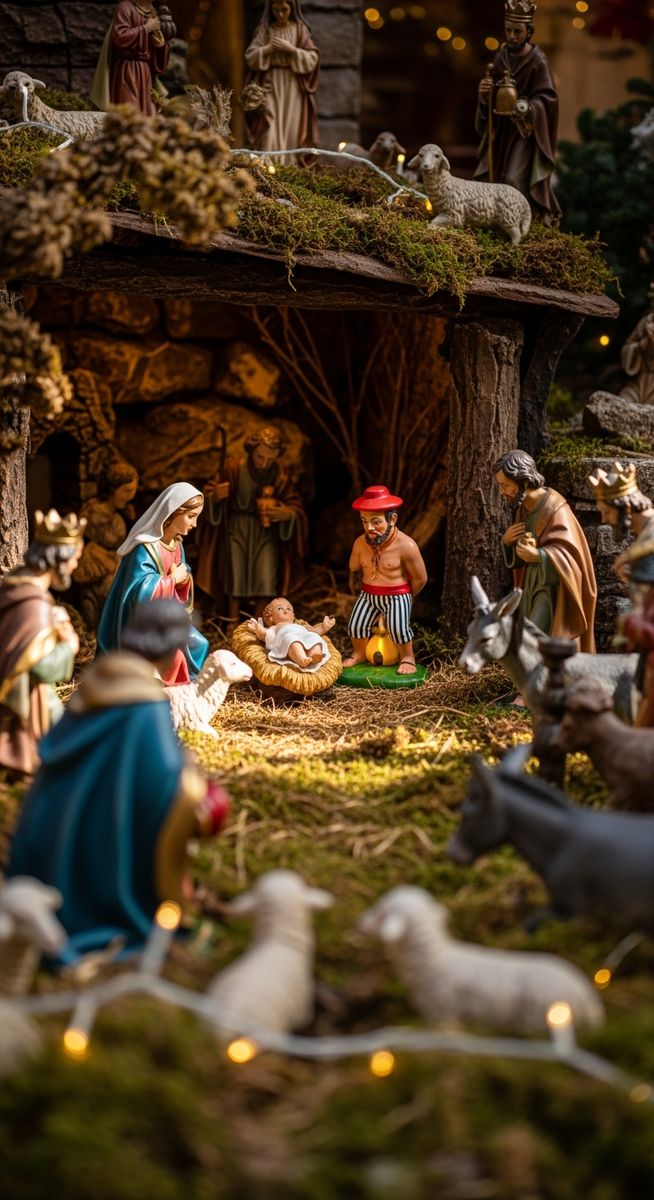
One of Spain’s, um, weirdest Christmas traditions comes from Catalonia – el Caganer, a small figurine of someone defecating that’s hidden somewhere in nativity scenes.
Yes, really. This tradition dates back to the 18th century and represents fertility and good fortune for the coming year.
You’ll find Caganers in every imaginable form throughout Barcelona in December, from a man in the traditional Catalan attire to modern celebrities and politicians.
If you don’t believe me, this video explains it remarkably accurately. Warning: there’s some adult language here.
4. Tió de Nadal (The Christmas Log That Poops Presents)
Did you get to the end of that video? As they mention another beloved Catalan Christmas tradition, involving a wooden log with a painted face called Tió de Nadal or “Caga Tió.”
Families “feed” the log pieces of fruit each night for about a month leading up to Christmas, covering it with a blanket to keep it warm.
On Christmas Eve, children beat the log with sticks while singing a song, encouraging the log to “poop” out presents and sweets (in fact, the kids sing “if you don’t poop out candy, I’ll hit you harder”. Delightful.).
I swear to you I’m telling the truth with these…
5. The Three Kings
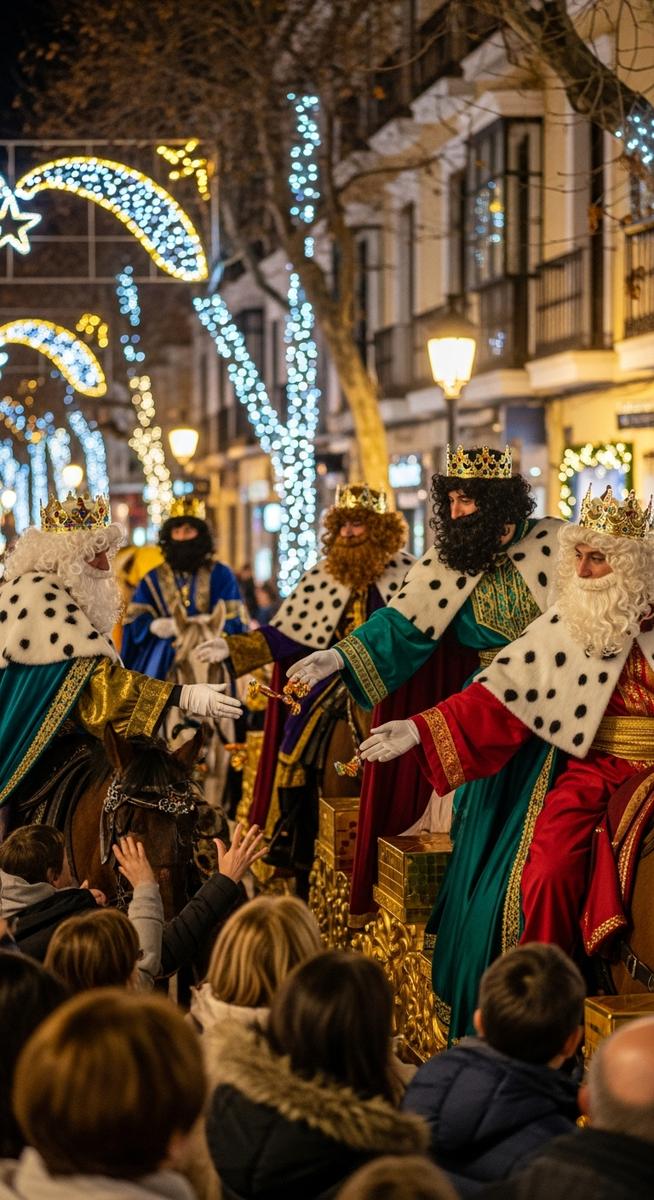
Unlike most countries where Santa Claus brings gifts on Christmas Day, Spanish children receive their presents on January 6th from the Three Kings (Los Reyes Magos). This tradition follows the biblical story of the Magi bringing gifts to baby Jesus.
The night before Three Kings Day, children leave their shoes out filled with hay and water for the kings’ camels. They wake up to find presents if they’ve been good, or coal if they haven’t – though these days the “coal” is usually sweet candy shaped like coal.
6. Midnight Mass
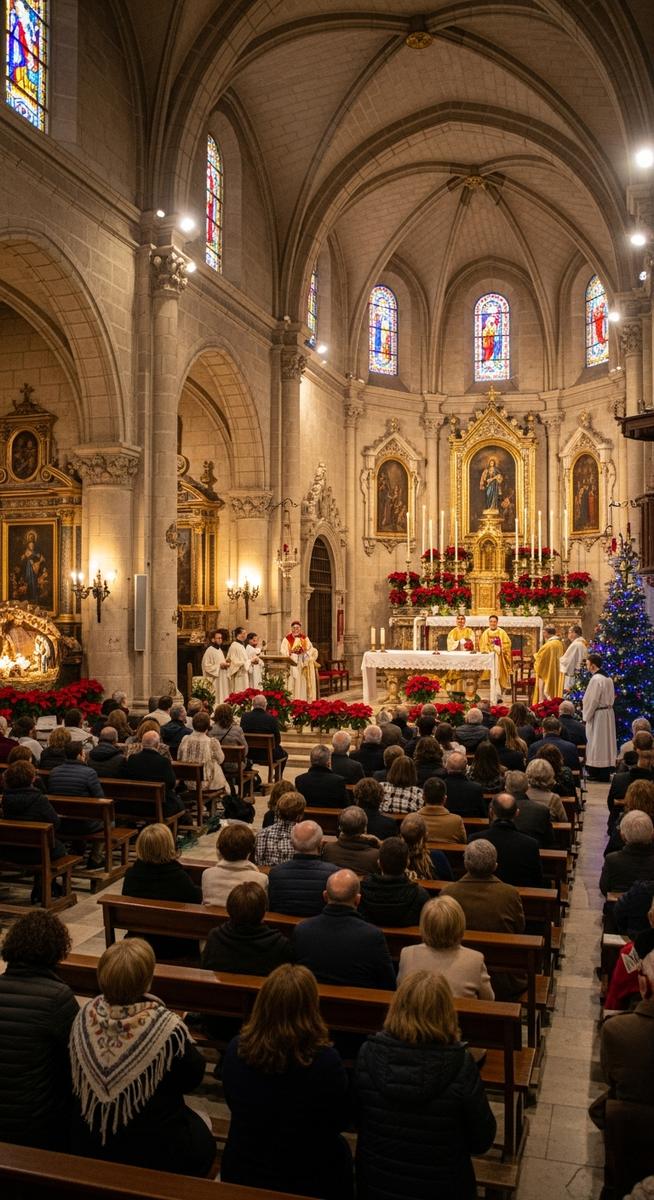
La Misa del Gallo (Rooster’s Mass) at midnight on Christmas Eve remains central to Spanish Christmas celebrations. This tradition gets its name from the belief that a rooster crowed at the moment of Jesus’s birth.
Churches throughout Spain hold special services, with many featuring elaborate nativity scenes and traditional carol singing. Even in secular families, attending midnight mass may form part of the Christmas Eve routine, bringing communities together in celebration.
7. Belenes (Nativity Scenes)
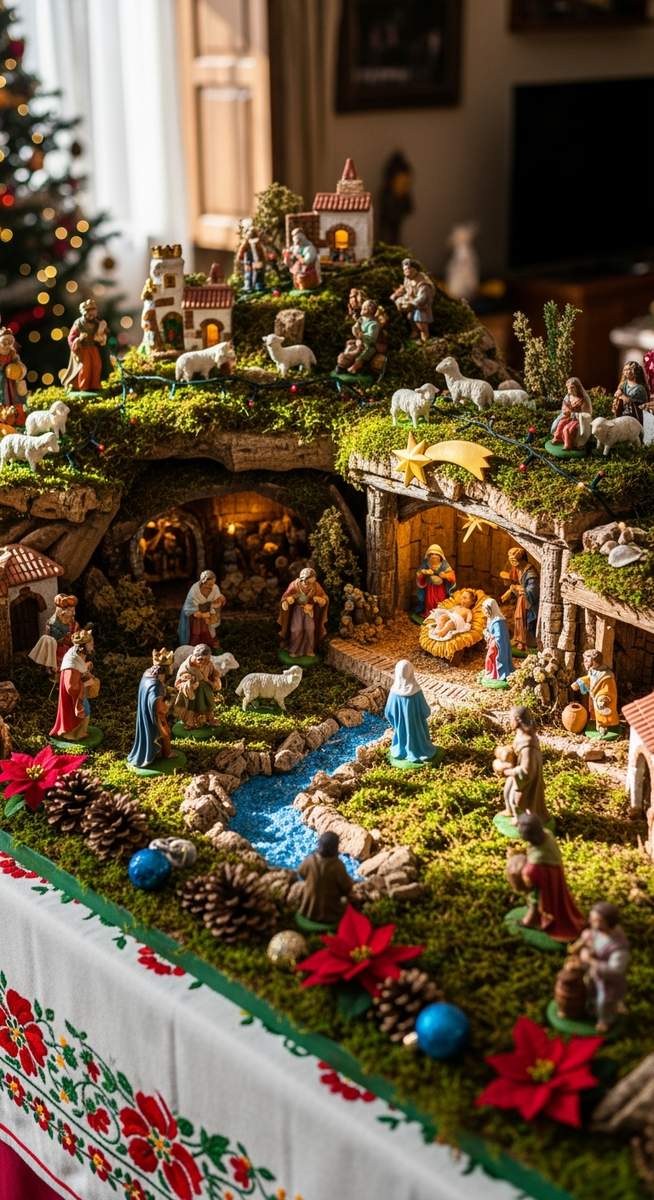
Spanish nativity scenes, called belenes, go far beyond simple stable displays. These elaborate miniature worlds often recreate entire towns and landscapes, complete with flowing water, twinkling lights, and dozens of figurines.
Many Spanish cities host public belén competitions, with some displays covering entire rooms or city squares. The tradition of creating family belenes means that Spanish children grow up learning the Christmas story through these detailed, hands-on displays.
8. Nochebuena (Christmas Eve)
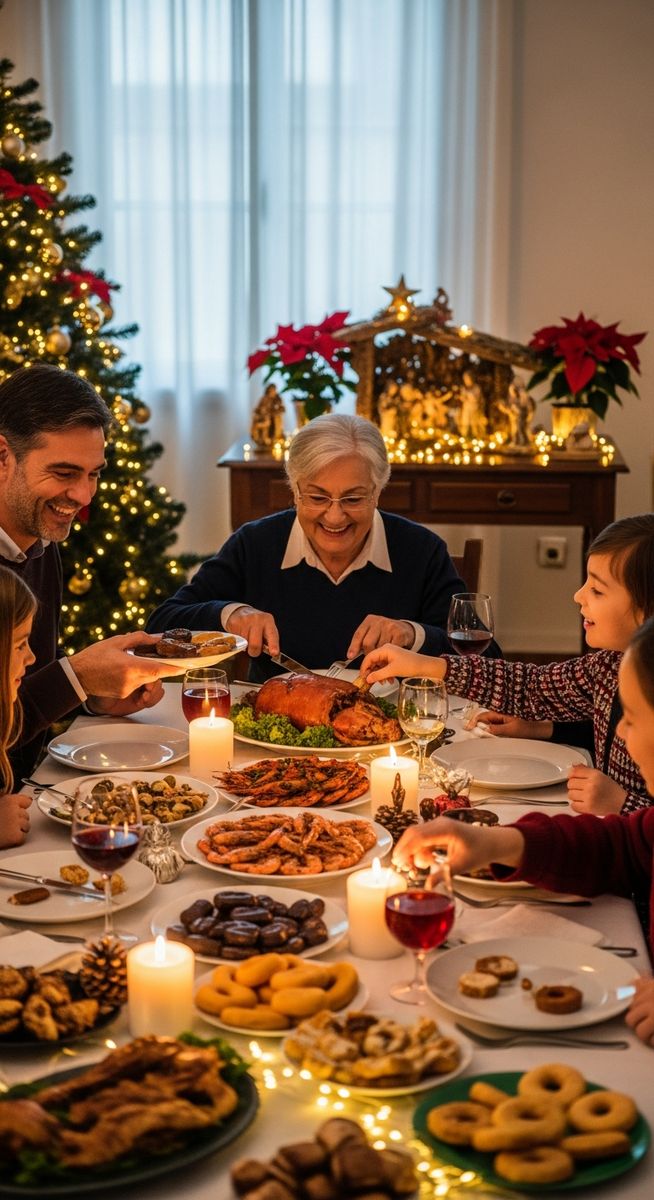
Christmas Eve (Nochebuena) represents the most important day of the Spanish Christmas calendar. Families gather for elaborate late-night dinners that often don’t begin until 10 PM, reflecting Spain’s culture of late dining.
The meal typically features seafood in coastal regions and meat dishes inland, followed by traditional desserts like turrón and mantecados. After dinner, many families attend midnight mass before returning home for more celebration that can last until dawn.
9. Olentzero
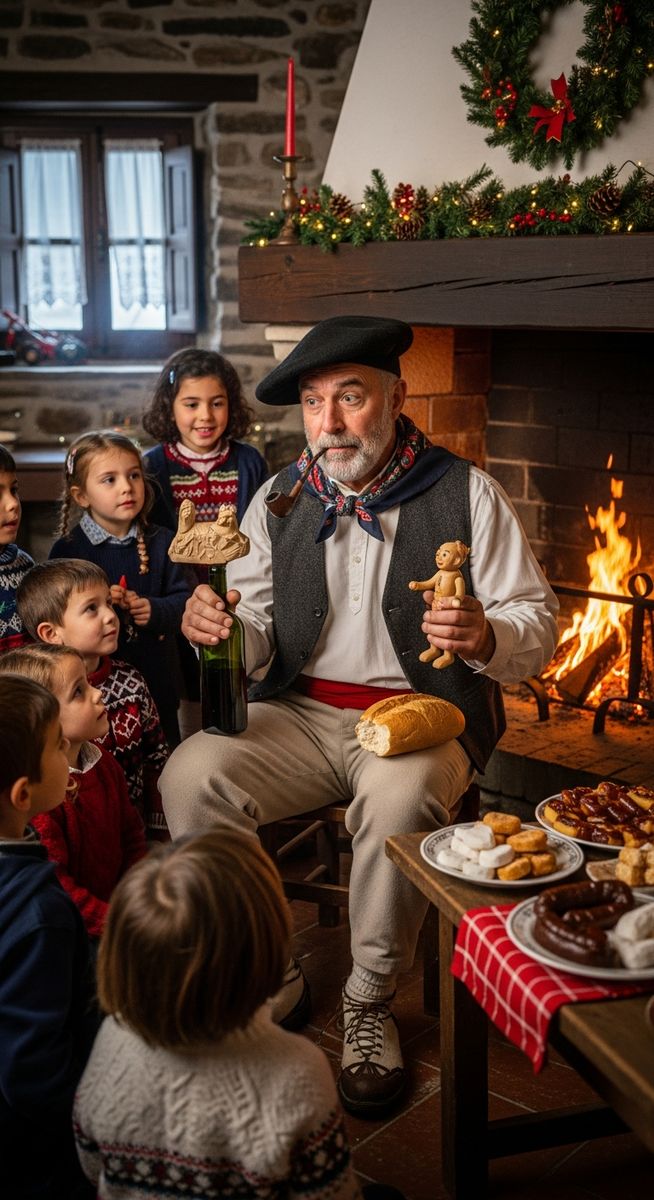
In the Basque Country, children eagerly await the arrival of Olentzero, a jolly charcoal maker who comes down from the mountains on Christmas Eve. This bearded figure, dressed in traditional Basque clothing, brings gifts to well-behaved children.
Olentzero parades happen throughout Basque towns and cities, with the character often portrayed by a local person who interacts with children and families. This tradition predates Christian Christmas celebrations and represents the survival of ancient Basque winter solstice customs.
10. Mari Domingi
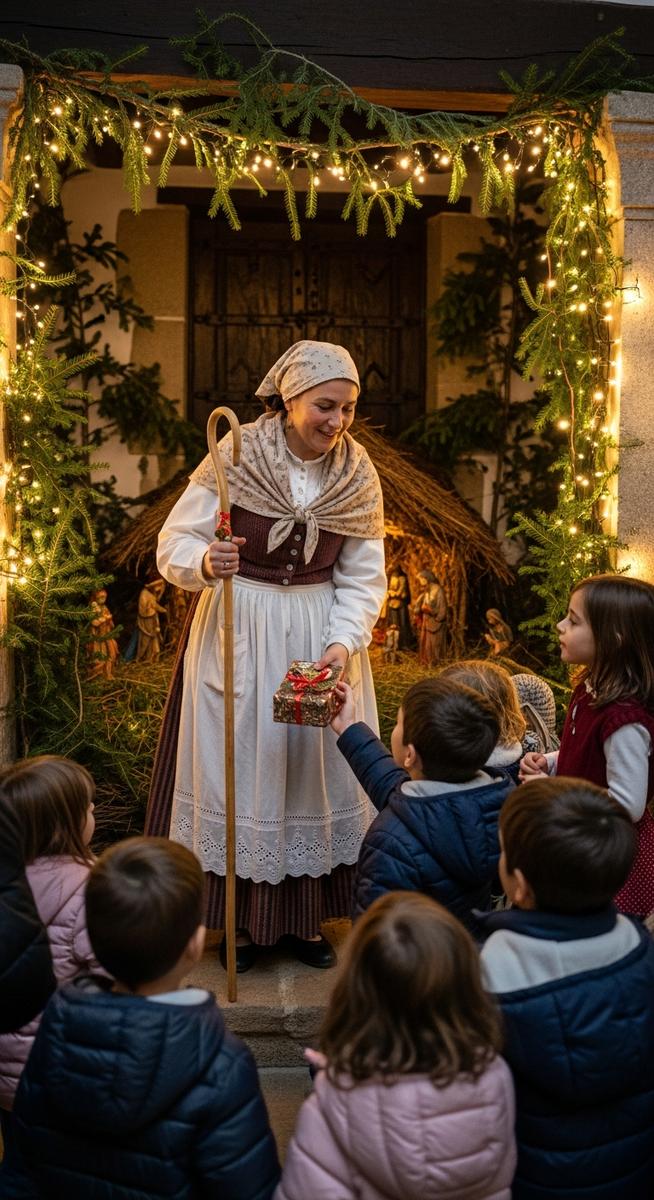
Another unique Basque tradition involves Mari Domingi, a magical hen who supposedly lays presents instead of eggs during the Christmas season. Children leave out small baskets hoping that Mari Domingi will fill them with gifts and treats.
This tradition works alongside Olentzero, with some families incorporating both characters into their Christmas celebrations. The hen represents fertility and abundance, themes that run throughout many Spanish regional Christmas customs.
11. Apalpador
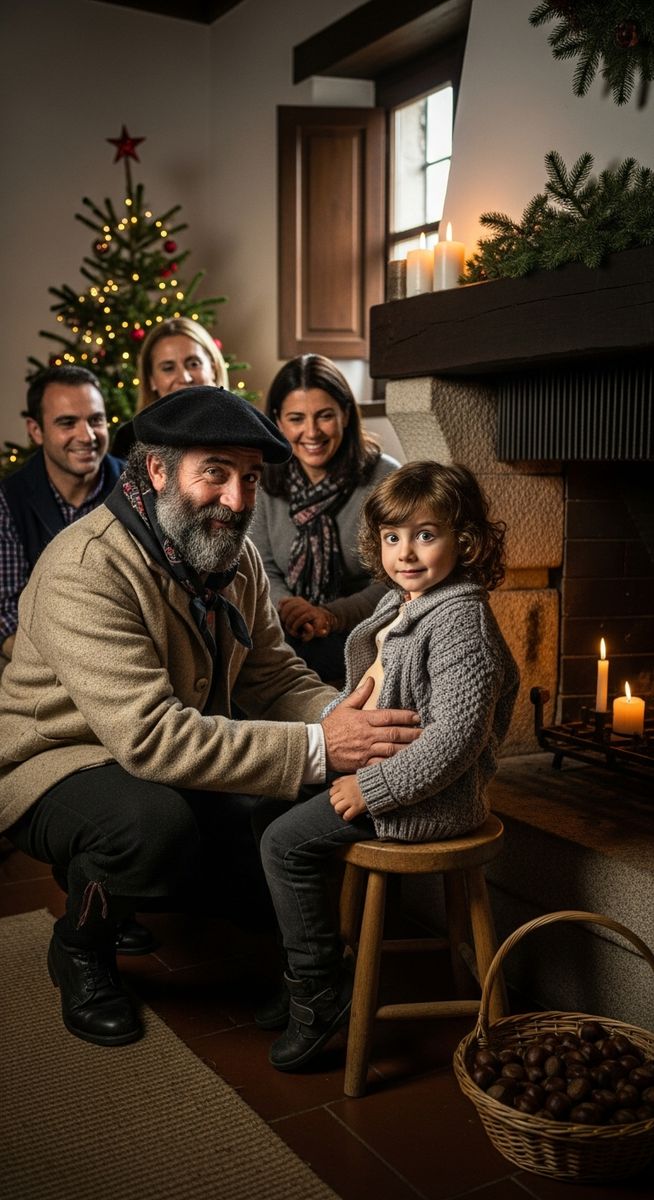
Galicia’s Christmas tradition centers around Apalpador, a gentle giant who visits homes on New Year’s Eve to check that children have eaten well during the year. He does this by touching their bellies while they sleep.
If the children are well-fed and healthy, Apalpador leaves chestnuts and small gifts as rewards. This tradition emphasizes the importance of family care and ensuring that everyone in the community has enough to eat during the winter months.
12. New Year’s Eve and the Twelve Grapes Tradition
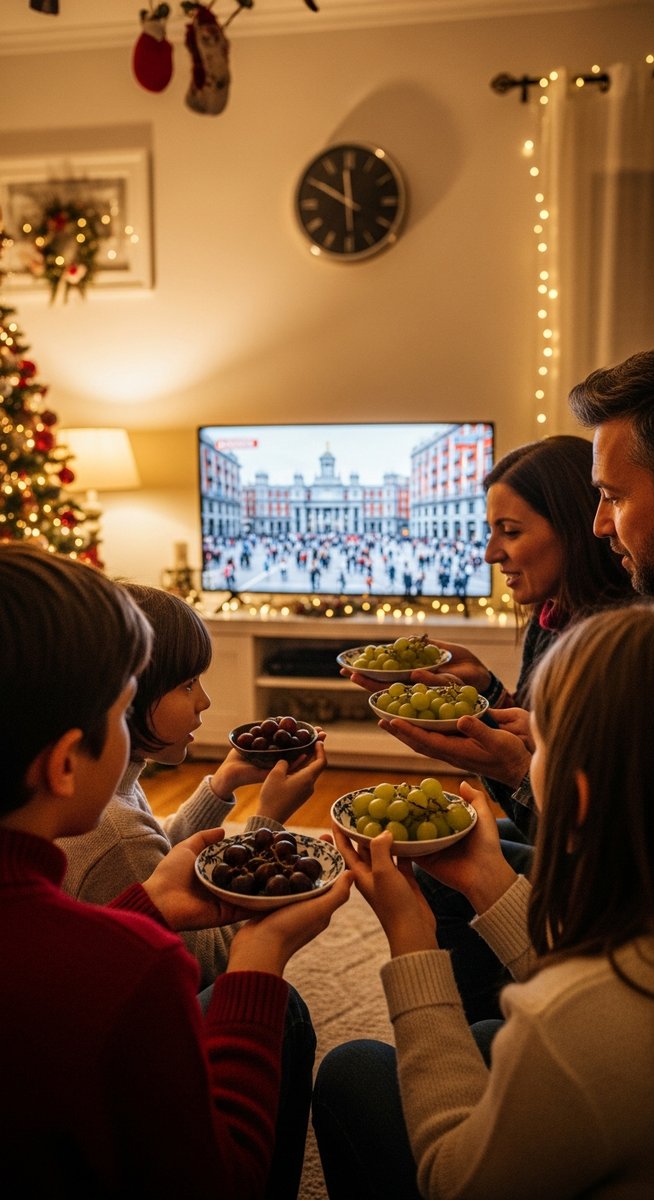
Spain’s most famous New Year’s tradition involves eating twelve grapes at the stroke of midnight – one grape for each chime of the clock. This practice, which started in Madrid’s Puerta del Sol, has spread throughout Spain and even to other Spanish-speaking countries, with New Year’s Eve in Barcelona being particularly spectacular.
Each grape represents good luck for one month of the coming year, and eating all twelve before the clock finishes chiming ensures twelve months of prosperity. It’s harder than it sounds, and watching people frantically stuff grapes in their mouths as the clock strikes makes for hilarious New Year’s entertainment.
13. Christmas Carols and Music
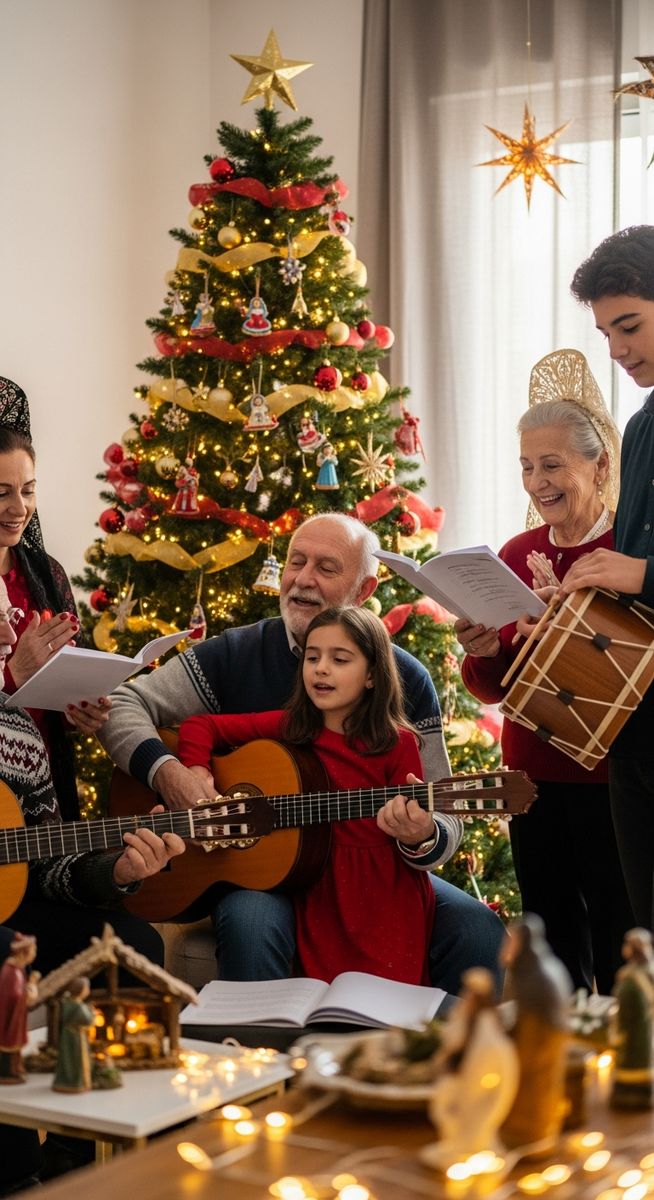
Spanish Christmas carols, called villancicos, fill the air throughout December and January. These traditional songs blend religious themes with regional musical styles, creating a unique soundtrack to the Spanish holiday season.
Each region has its own villancicos, sung not only in Spanish, but also in local languages including Catalan, Basque, and Galician. Many feature simple, catchy melodies that make them perfect for family sing-alongs during long Christmas Eve dinners.
14. Boxing Day and Beyond
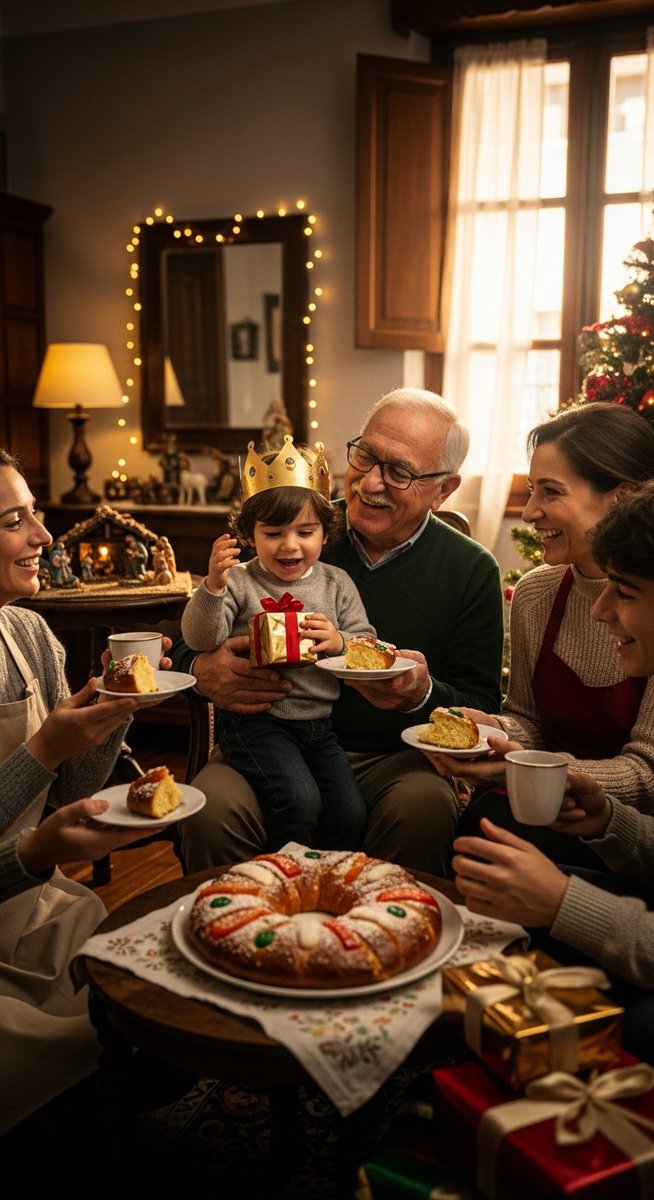
Spanish Christmas celebrations don’t end on December 25th – they continue through Epiphany on January 6th, making it one of Europe’s longest holiday seasons. January 6th marks the official end of Christmas with Three Kings parades in every Spanish city and town.
This extended celebration means you can enjoy Christmas markets, special holiday menus, and festive atmospheres for weeks.
